Discovering the Function of Universal Cloud Storage Space Providers in Data Protection and Compliance
In today's electronic landscape, the application of global cloud storage space solutions has actually become vital in attending to data protection and compliance demands for organizations across different markets. As companies increasingly depend on cloud storage space solutions to manage and secure their data, exploring the elaborate function these services play in making sure information safety and security and meeting regulative criteria is essential. From mitigating risks to boosting information access, cloud storage services supply a diverse approach to safeguarding delicate details. The evolving nature of cyber risks and regulatory structures offers a dynamic difficulty that organizations have to navigate efficiently to maintain their information security and conformity requireds. By delving into the subtleties of global cloud storage space solutions, a clearer understanding of their effect on data safety and security and regulative conformity arises, shedding light on the complexities and opportunities that exist ahead.
Relevance of Cloud Storage Space Solutions
Cloud storage solutions play an essential function in contemporary data management strategies as a result of their scalability, ease of access, and cost-effectiveness. With the exponential growth of data in today's digital age, organizations are progressively turning to cloud storage space services to meet their advancing needs. Scalability is a vital benefit of cloud storage space, enabling companies to quickly readjust their storage capability as data demands change. This flexibility makes certain that business can efficiently handle their data without the demand for significant in advance financial investments in equipment facilities.
Access is one more vital element of cloud storage services. By saving data in the cloud, individuals can access their info from anywhere with a web connection, assisting in cooperation and remote job. This availability advertises functional effectiveness and enables seamless sharing of data across groups and places.
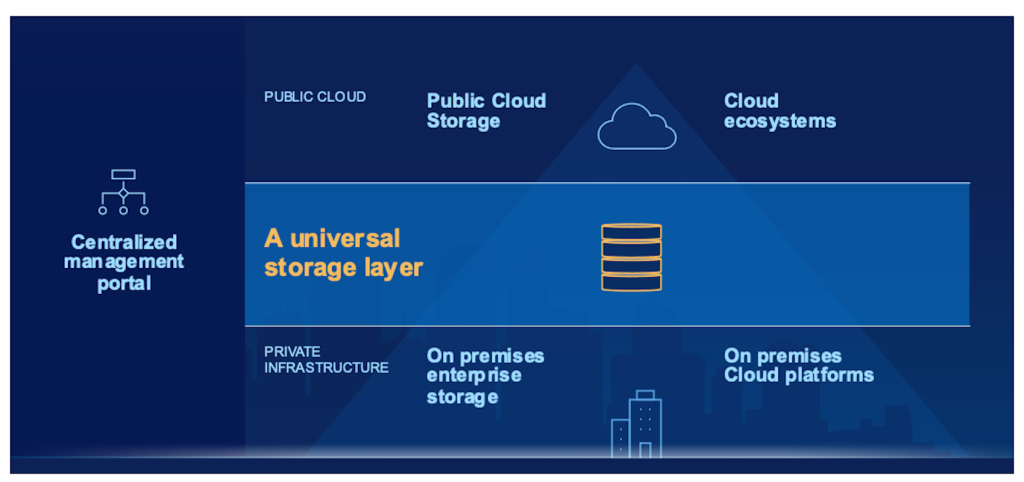
In addition, the cost-effectiveness of cloud storage solutions can not be underrated. By leveraging cloud storage space, companies can minimize expenditures linked with buying and maintaining physical servers. universal cloud storage. In addition, numerous cloud storage space companies use pay-as-you-go pricing versions, allowing organizations to pay only for the storage space ability they make use of. On the whole, the value of cloud storage services lies in their capacity to simplify data monitoring procedures, enhance ease of access, and reduced functional costs.
Data Protection Strategies With Cloud
By encrypting data before it is published to the cloud and keeping control over the file encryption secrets, companies can prevent unauthorized gain access to and alleviate the danger of information violations. Multi-factor verification, strong password policies, and regular access evaluations are some methods that can enhance information defense in cloud storage space solutions.
On a regular basis backing up information is another essential aspect of data security in the cloud. By combining file encryption, access controls, back-ups, and normal protection evaluations, companies can establish a robust information security approach in cloud atmospheres.
Conformity Considerations in Cloud Storage Space
Offered the vital nature of information protection approaches in cloud atmospheres, organizations need to additionally prioritize compliance factors to consider when it pertains to saving data in the cloud. Compliance demands vary throughout sectors and regions, making it necessary for companies to comprehend and adhere to the relevant guidelines. When making use of cloud storage space services, services require to guarantee that the service provider follows industry-specific criteria such as GDPR, HIPAA, or PCI DSS, relying on the kind of data being stored. Furthermore, organizations have to think about information residency needs to guarantee that data is stored in compliant locations.

Challenges and Solutions in Cloud Protection
Making certain robust safety procedures in cloud environments presents a diverse difficulty for companies today. Among the main challenges in cloud safety is data violations. Destructive stars constantly target cloud systems to gain unauthorized access to sensitive information. To mitigate this threat, companies need to apply solid file encryption procedures, gain access to controls, and routine security audits. An additional obstacle is the shared responsibility version in cloud computing, where both the cloud provider and the client are in charge of different aspects of safety and security. This can lead to complication and spaces in safety and security insurance coverage otherwise clearly specified. Organizations needs to clearly detail functions and obligations to make certain detailed safety procedures are in area.
Future Fads in Cloud Data Security
The advancing landscape of cloud information security is marked by a growing focus on aggressive defense techniques and adaptive protection steps (universal cloud storage). As modern technology breakthroughs and cyber risks become extra advanced, organizations are progressively concentrating on predictive analytics, expert system, and artificial intelligence to boost their information protection capacities in the cloud
One of the future trends in cloud data protection is the assimilation of automation and orchestration tools you can try this out to streamline security procedures and response procedures. By automating routine jobs such as danger detection, case response, and spot administration, companies can enhance their total safety and security position and much better safeguard their information in the cloud.
In addition, the adoption of a zero-trust protection model is obtaining traction in the realm of cloud information protection. This strategy assumes that dangers could be both external and interior, calling for continuous verification and consent for all customers and gadgets accessing the cloud setting. By executing a zero-trust structure, companies can minimize the risk of data violations and unauthorized access to delicate information kept in the cloud.
Verdict
